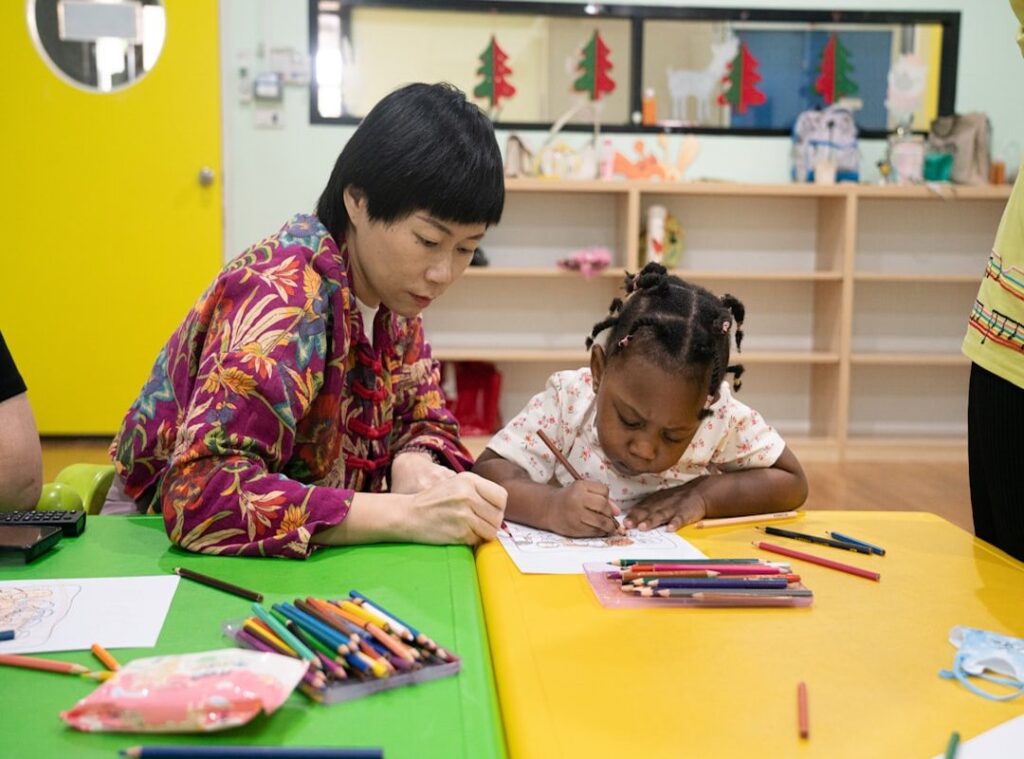
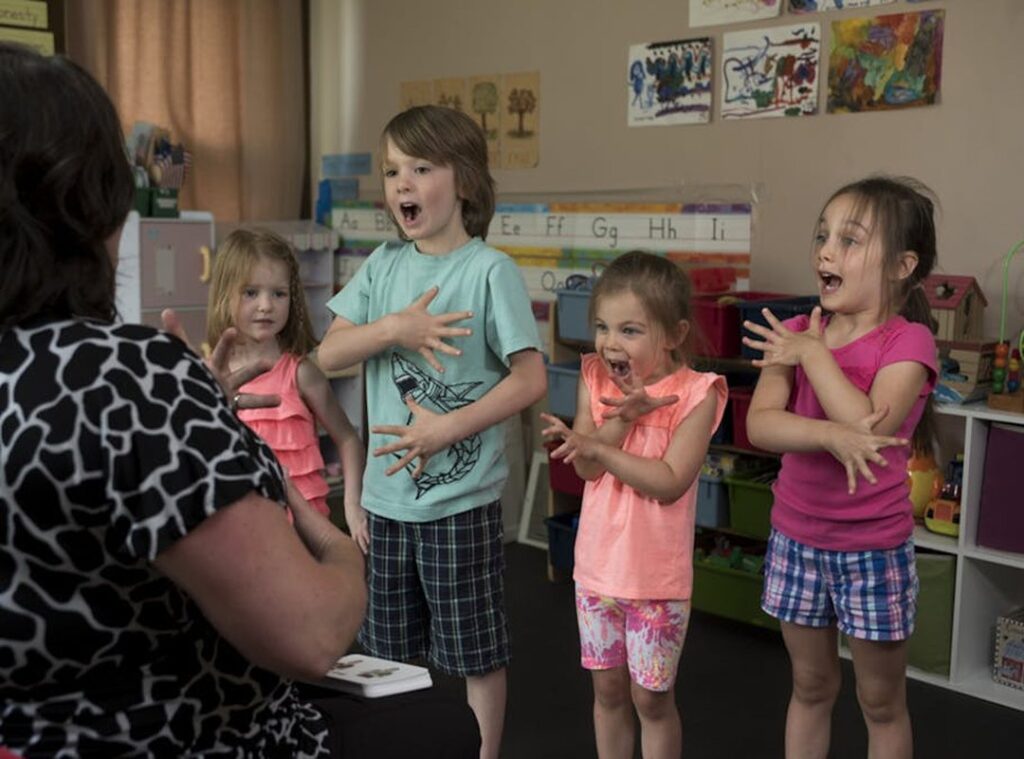
You know that mix of joy and confusion when your toddler starts babbling away? It’s adorable, sure, but are they on track? That’s the million-dollar question for many parents.
I’ve been there, analyzing every sound and wondering what it means. As a parent who navigated this stage, I get the stress. You want to make sure your child’s language development kids journey is smooth.
This article aims to ease that worry, providing a clear, stress-free guide. Forget textbook theory; this is built on real-life experience. You’ll find practical tips that fit into the chaos of parenting.
Because who has time for complicated strategies?
By the end, you’ll feel more confident about supporting your child. Ready to dive in? Let’s make sense of those babbles together.
Language Growth: A Magical Journey
Let’s break down language development kids in simple terms. Think of it like a computer. Kids take in information (receptive language) and then output their thoughts (expressive language).
It’s like how a computer processes input and then generates output. But here’s the kicker: kids understand way more than they can say at first. Ever notice how they follow directions before they can speak?
That’s receptive language doing its thing.
In the early days, it’s all about non-verbal cues. Babies cry, point, or gesture to get their point across. Then come those adorable coos and babbles.
But why do they understand before they speak? It’s part of the process. Understanding comes first, which can ease your worries if you’re anxious about their speaking skills.
It’s magical, really. One day they’re babbling nonsense, and before you know it, they’re saying their first words. It’s a natural progression.
They’re like sponges, soaking up everything around them. Soon enough, those sponges start squeezing out words and sentences.
I know many parents stress over these milestones. But trust me, it’s a beautiful and natural process to witness. The same way you watch for physical growth patterns in toddlers, language growth is another journey to marvel at.
Just remember, every child is different. They’ll get there in their own time, and you’ll have a front-row seat to this incredible show.
Isn’t that something to celebrate?
A Parent’s Roadmap: Language Milestones from Baby to Toddler
I’m always amazed at how quickly kids pick up language. But let’s be real, it’s not a race. Every child finds their groove in their own time.
So if you’re worried about language development kids, you’re not alone.
6-12 Months
At this age, babies are all about sounds. You might hear them babbling with those adorable “ba-bas” and “da-das”. They’re not really saying “Dad” yet (sorry, Dad).
- Babbles with varying tones
- Responds to sounds by making sounds
12-18 Months
Now, they’re starting to use real words. And it’s fascinating to watch them light up when they realize they’ve communicated something. They’ll follow simple commands too, which always feels like a mini victory.
- Starts using single words meaningfully
- Follows one-step commands like “get your shoes”
18-24 Months
This is when things get interesting. Suddenly, they’re stringing words together and forming simple sentences. It’s like they’ve unlocked a new level.
You’ll hear two-word phrases like “more juice”.
- Uses two-word combinations
- Identifies common objects or people in pictures
2-3 Years
Their vocabulary takes off now. They’ll surprise you with the things they remember and say. Sometimes, you’ll wish they weren’t so good at mimicking your words (or tone).
- Uses three-word sentences
- Understands and responds to “what” and “where” questions
Remember, these are just age-appropriate speech and language milestones. Every child is unique and develops at their own pace, so breathe. If you’re worried, consult a pediatrician or a speech therapist.
But let’s keep it chill. Parenting is stressful enough without unnecessary worries, right?
Weaving Words into Your Day: 5 Simple Ways to Boost Vocabulary
Building vocabulary in kids isn’t just about flashcards or fancy apps. You don’t need those. Trust me, the secret sauce is everyday life.

Become a Narrator: I talk through my routines. Making lunch? I say, “Let’s grab the juicy tomato!” Getting dressed? “These are your soft socks.” It’s about giving kids context. They learn by seeing words in action. No extra time needed. Just talk.
Read, Point, and Ask: Reading isn’t just about the text. I point to pictures and ask, “What’s that?” (Even if I know the answer.) It gets kids thinking. They start connecting words to the world around them. It’s interactive and fun. Plus, it keeps them engaged.
The Power of Pausing: You might think singing is just for fun, but it’s more than that. I pause mid-song. “Twinkle, twinkle, little…?” It encourages kids to fill in the blanks. It’s a simple trick. You’re teaching them to think ahead. They’re active participants.
Expand on Their Words: When my kid says “car,” I don’t stop there. I add, “Yes, that’s a big, red car!” It models sentence structure. Kids pick up on this. They learn how words fit together. It’s about expanding their world, one sentence at a time.
Playful Sounds: Sounds matter. Animal noises, car honks, they all contribute. I mimic them during play. It’s silly but effective. These sounds are the building blocks of speech. Early language development is more than words. It’s about sounds too.
These strategies might seem simple. They are. That’s the point.
No special equipment needed. Just you and your kid. Start today.
Your child’s vocabulary (and their language development) will thank you. For more on how this ties into nurturing cognitive skills early childhood, check out this resource.
When to Check In: Understanding Language Delays Without the Panic
Ever worry about your child’s language development? Kids learn at different speeds, but it’s natural to wonder. Are they responding to their name by 12 months?
Using single words by 18 months? If you’re not sure, don’t panic. These aren’t hard rules, just gentle signals.
I’m not a doctor, but if you’re concerned, talking to your pediatrician is a smart move. They know your child and can provide a referral to a speech-language pathologist if needed. That’s proactive parenting.
I get it, the fear of “what if something is wrong?” can be overwhelming. But early support can make a big difference. It’s not about diagnosing problems; it’s about empowering you as a parent.
You’re doing great by seeking advice.
And remember, you’re not alone. Many parents have the same questions. It’s okay to admit when we’re unsure.
Your child’s growth is a journey, and there’s no exact timeline.
So take a deep breath. Trust your instincts. You’re on the right path.
Make Every Moment Count
I’ve seen it myself: supporting your child’s language growth isn’t about drills. It’s about the small moments, the everyday chats that build connection. Worried you’re not doing enough?
Guess what (you) already are. By understanding milestones and weaving in simple daily strategies, you’re your child’s best teacher.
So, why not try it? This week, narrate one routine, like bath time. Watch how your child engages.
You’ve got this! Remember, you’re shaping their world with every word. Language development kids isn’t complicated. Let’s make those moments count.
Need more help? Check out nitkaparenting.com. You’re not alone in this journey.
 Parenting Content Manager
There is a specific skill involved in explaining something clearly — one that is completely separate from actually knowing the subject. Carlos Magnerifier has both. They has spent years working with nitka toddler development guides in a hands-on capacity, and an equal amount of time figuring out how to translate that experience into writing that people with different backgrounds can actually absorb and use.
Carlos tends to approach complex subjects — Nitka Toddler Development Guides, Child Growth Insights, Motherhood Routine Hacks being good examples — by starting with what the reader already knows, then building outward from there rather than dropping them in the deep end. It sounds like a small thing. In practice it makes a significant difference in whether someone finishes the article or abandons it halfway through. They is also good at knowing when to stop — a surprisingly underrated skill. Some writers bury useful information under so many caveats and qualifications that the point disappears. Carlos knows where the point is and gets there without too many detours.
The practical effect of all this is that people who read Carlos's work tend to come away actually capable of doing something with it. Not just vaguely informed — actually capable. For a writer working in nitka toddler development guides, that is probably the best possible outcome, and it's the standard Carlos holds they's own work to.
Parenting Content Manager
There is a specific skill involved in explaining something clearly — one that is completely separate from actually knowing the subject. Carlos Magnerifier has both. They has spent years working with nitka toddler development guides in a hands-on capacity, and an equal amount of time figuring out how to translate that experience into writing that people with different backgrounds can actually absorb and use.
Carlos tends to approach complex subjects — Nitka Toddler Development Guides, Child Growth Insights, Motherhood Routine Hacks being good examples — by starting with what the reader already knows, then building outward from there rather than dropping them in the deep end. It sounds like a small thing. In practice it makes a significant difference in whether someone finishes the article or abandons it halfway through. They is also good at knowing when to stop — a surprisingly underrated skill. Some writers bury useful information under so many caveats and qualifications that the point disappears. Carlos knows where the point is and gets there without too many detours.
The practical effect of all this is that people who read Carlos's work tend to come away actually capable of doing something with it. Not just vaguely informed — actually capable. For a writer working in nitka toddler development guides, that is probably the best possible outcome, and it's the standard Carlos holds they's own work to.