From the first time your baby wraps their tiny fingers around yours to those exciting first wobbly steps, parenting is filled with equal parts joy and anxiety. It’s natural to wonder if your child is developing “on track,” especially when medical charts and milestone lists can feel overwhelming and confusing. This guide is here to simplify child physical growth milestones in a clear, reassuring way. You’ll find an easy, age-by-age breakdown of what to expect, helping you understand, support, and celebrate your child’s unique physical development journey with confidence.
The First Year: From Tiny Wiggles to First Steps (0-12 Months)
If you’ve ever googled at 2 a.m., “Is my baby behind?”—you’re not alone. The first year is full of excitement… and quiet panic. Every milestone can feel like a ticking clock (especially when another baby in your playgroup is already doing it).
0-3 Months: Building the Foundation
This stage is all about head control, smoother arm and leg movements, and those adorable attempts to bring hands to their mouth. “Tummy time” (placing your baby on their stomach while supervised) strengthens neck and core muscles. Yes, some babies protest like tiny revolutionaries—but short, frequent sessions make a big difference.
4-6 Months: Discovering Movement
Now things get interesting. Rolling over (both ways), pushing up on elbows or hands, and sitting with support often appear. Hand-eye coordination improves as they reach and swipe at toys (and your glasses). If rolling hasn’t happened yet, it’s usually not a red flag—babies develop at different speeds.
7-9 Months: Becoming Mobile
Sitting independently, rocking on hands and knees, and crawling may emerge. Crawling styles vary—classic crawl, army crawl, or the adorable scoot. Some babies skip crawling entirely, which can frustrate parents who expected textbook child physical growth milestones.
10-12 Months: Getting Vertical
Pulling up, cruising along furniture, standing briefly, and maybe first steps. Walking age varies widely. Comparing timelines steals joy. For reassurance on development through play, explore how play supports healthy brain development in kids. Sometimes progress looks slow—until suddenly, it isn’t.
The Toddler Years: Mastering Movement and Exploration (1–3 Years)
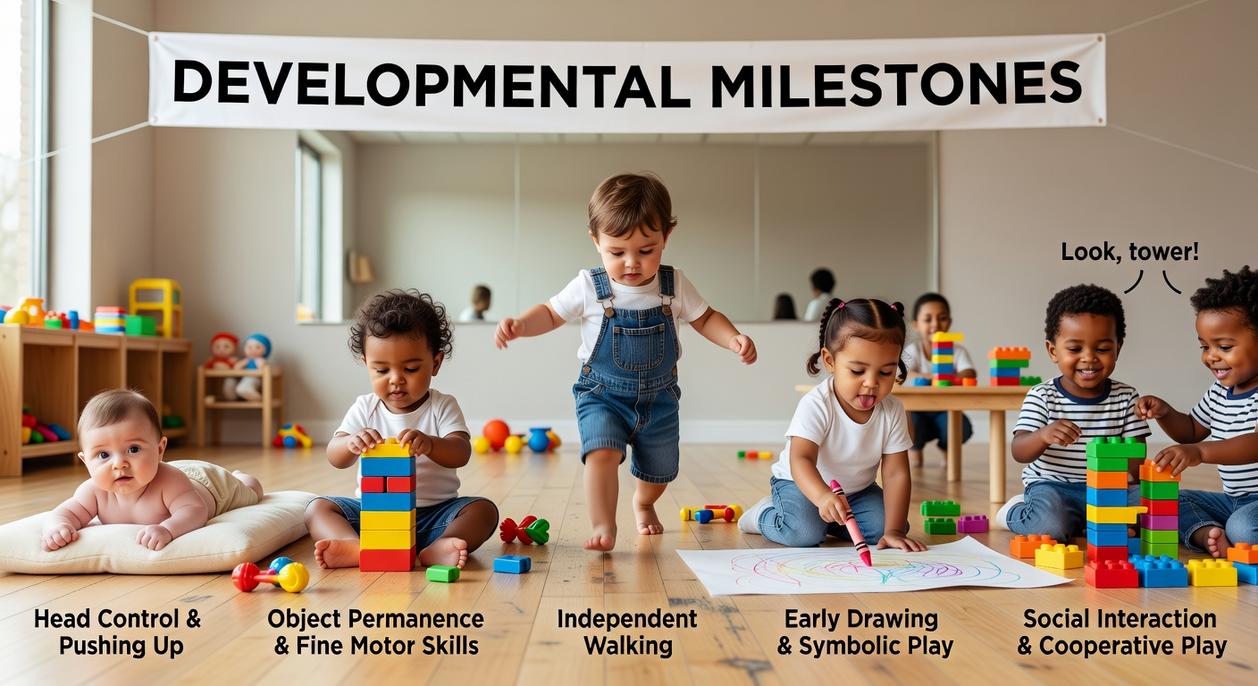
I still remember the day my toddler let go of the coffee table and took three wobbly steps toward me—arms out, eyes wide, utterly determined. That shift from baby to walker feels like watching evolution in fast-forward (and realizing you now need baby gates everywhere).
12–18 Months: Confident Walking
Those early steps quickly turn into steadier strides. Around this stage, toddlers begin stooping to pick up a toy without toppling over, walking backward a few steps, and attempting to climb onto furniture or stairs. These small victories are major child physical growth milestones, signaling stronger leg muscles and improving balance. Some argue that pushing independence too early leads to bumps and bruises. That’s fair—but minor tumbles are often how coordination sharpens (within safe limits, of course).
18–24 Months: Adding Speed and Skill
This is when walking transforms into a stiff little run. Toddlers start kicking a ball, attempting an overhand throw, and navigating rooms like tiny explorers on a mission. I once watched mine chase the family dog in determined slow motion—pure joy, questionable aim. Their spatial awareness improves, and so does confidence.
2–3 Years: Coordination and Power
Now come the big moves: jumping with both feet off the ground, climbing playground equipment, and walking up and down stairs using alternating feet. With each new skill comes a louder refrain of “I do it!” Independence blossoms alongside coordination.
Pro tip: Offer safe challenges—low climbing structures or soft balls—to build strength while minimizing risk. (Yes, you’ll still hover nearby. That’s part of the job.)
The Preschool Years: Refining Coordination and Agility (3-5 Years)
3-4 Years: Gross Motor Leaps
Between three and four, big physical breakthroughs happen almost monthly. Think riding a tricycle, catching a large bounced ball, or hopping on one foot for a few seconds. These aren’t just cute party tricks; they strengthen balance (the body’s ability to stay upright and steady) and coordination (how well muscles work together). So, encourage daily outdoor play. Set up simple obstacle courses, roll balls back and forth, and practice short hopping games. Pro tip: choose lightweight balls to build confidence before moving to smaller, faster ones.
4-5 Years: Advanced Skills Emerge
Soon after, movements become smoother and more connected. Skipping, doing somersaults, and swinging independently show that your child can combine skills into one fluid action. It’s a bit like watching a tiny ninja warrior in training (minus the dramatic soundtrack). At this stage, prioritize playground time and supervised tumbling on soft mats.
Fine Motor Refinement
Meanwhile, fine motor control advances too. Using scissors, drawing recognizable shapes, and buttoning clothes reflect parallel child physical growth milestones. Offer crayons, child-safe scissors, and practice dressing skills daily. Small, consistent challenges build lasting confidence.
Developmental timelines are guides, not deadlines. A wide range of normal exists, and children move at their own pace (yes, even if your neighbor’s toddler is already sprinting). Some argue that watching child physical growth milestones too closely creates anxiety. That can be true—but ignoring clear signals helps no one. Consider checking in with a pediatrician if your child loses a skill they once had, shows delays across multiple areas, or has noticeable weakness or stiffness on one side. A conversation can be empowering, giving you clarity, reassurance, and a plan. Trust your instincts. You are your child’s best advocate.
Supporting Every Step, Jump, and Climb
This guide was created to help you see the bigger picture of your child’s incredible journey—not just a checklist of child physical growth milestones, but a story of strength, courage, and discovery unfolding day by day. It’s natural to worry about “normalcy” and wonder if your little one is keeping up. Every parent feels that quiet concern.
The truth is, the most powerful support you can offer isn’t perfection—it’s a safe, loving space to move, play, fall, and try again. Celebrate each wobble, each leap, each climb. These small victories pass quickly, so slow down, cheer them on, and enjoy this fleeting, beautiful stage of rapid growth.
 Founder & CEO
Draxian Vosswyn is the kind of writer who genuinely cannot publish something without checking it twice. Maybe three times. They came to parenting tips and strategies through years of hands-on work rather than theory, which means the things they writes about — Parenting Tips and Strategies, Curious Insights, Mom Life Highlights, among other areas — are things they has actually tested, questioned, and revised opinions on more than once.
That shows in the work. Draxian's pieces tend to go a level deeper than most. Not in a way that becomes unreadable, but in a way that makes you realize you'd been missing something important. They has a habit of finding the detail that everybody else glosses over and making it the center of the story — which sounds simple, but takes a rare combination of curiosity and patience to pull off consistently. The writing never feels rushed. It feels like someone who sat with the subject long enough to actually understand it.
Outside of specific topics, what Draxian cares about most is whether the reader walks away with something useful. Not impressed. Not entertained. Useful. That's a harder bar to clear than it sounds, and they clears it more often than not — which is why readers tend to remember Draxian's articles long after they've forgotten the headline.
Founder & CEO
Draxian Vosswyn is the kind of writer who genuinely cannot publish something without checking it twice. Maybe three times. They came to parenting tips and strategies through years of hands-on work rather than theory, which means the things they writes about — Parenting Tips and Strategies, Curious Insights, Mom Life Highlights, among other areas — are things they has actually tested, questioned, and revised opinions on more than once.
That shows in the work. Draxian's pieces tend to go a level deeper than most. Not in a way that becomes unreadable, but in a way that makes you realize you'd been missing something important. They has a habit of finding the detail that everybody else glosses over and making it the center of the story — which sounds simple, but takes a rare combination of curiosity and patience to pull off consistently. The writing never feels rushed. It feels like someone who sat with the subject long enough to actually understand it.
Outside of specific topics, what Draxian cares about most is whether the reader walks away with something useful. Not impressed. Not entertained. Useful. That's a harder bar to clear than it sounds, and they clears it more often than not — which is why readers tend to remember Draxian's articles long after they've forgotten the headline.