

If you’re searching for practical ways to support your toddler’s development at home, you’re likely looking for activities that are simple, effective, and actually work. This guide is designed to help you understand how fine motor activities for toddlers can strengthen hand–eye coordination, improve focus, and build the foundational skills needed for writing, dressing, and everyday independence.
Many parents feel unsure about which activities truly support healthy growth versus which are just busy work. Here, you’ll find developmentally appropriate ideas backed by child development research and widely recommended early learning practices. We’ve carefully reviewed guidance from pediatric experts and early childhood educators to ensure the activities shared are both safe and impactful.
By the end of this article, you’ll know exactly which fine motor activities for toddlers to try, why they matter, and how to easily incorporate them into your daily routine without adding stress to your schedule.
Understanding the Building Blocks: What Are Fine Motor Skills?
Incorporating fine motor skill activities for toddlers using everyday items not only sparks creativity and learning, but it can also transform those messy moments into joyful experiences, as highlighted in our article on finding joy in the chaos of motherhood – for more details, check out our Finding Joy in the Chaos: Mindset Shifts for Happier Motherhood.
Fine motor skills are the coordinated movements of the small muscles in the hands, fingers, and wrists. In other words, they’re the tiny actions that make a big difference—like buttoning a shirt, holding a spoon, or turning a page (yes, even that crinkly bedtime favorite).
Why does this matter? Because strong fine motor skills give children independence. The better they can control their hands, the more confidently they can eat, dress, draw, and eventually write.
How These Skills Develop
Development follows a natural path. Babies begin with a reflexive grasp—instinctively curling their fingers around yours. Soon after, they master the pincer grasp, using thumb and forefinger to pick up snacks. By preschool, many refine a dynamic tripod grip, the three-finger hold that supports writing.
Along the way, children build hand-eye coordination, bilateral coordination (using both hands together), and in-hand manipulation. Practicing fine motor activities for toddlers strengthens these foundations—and even supports milestones like the signs your toddler is ready for potty training.
The First Year: Building a Foundation for Dexterity (0–12 Months)
During the first year, tiny hands are busy making big discoveries. At this stage, the focus is on sensory exploration and natural grasping reflexes. Think of it as your baby’s “origin story” phase—before the superhero-level snack grabbing begins.
Activity 1 – Reaching and Grasping: First, hang soft, safe toys from a play gym. As your baby kicks and waves, they’ll start reaching, batting, and eventually grasping. This simple game builds hand-eye coordination—the ability to connect what they see with how their hands move (a skill even adults rely on daily, like catching car keys midair).
Activity 2 – Transferring Objects: Once grasping clicks, offer a soft block and encourage passing it between hands. This develops bilateral coordination, meaning both sides of the body learn to work together.
Activity 3 – Finger Foods: Next comes motivation. Soft, safely-sized foods like puffs or cooked peas inspire the pincer grasp—using thumb and forefinger together. It’s basically baby’s version of leveling up.
Activity 4 – Turning Pages: Finally, sturdy board books allow page turning, strengthening wrist and finger control.
Altogether, these fine motor activities for toddlers lay the groundwork for writing, dressing, and independent play later on.
The Toddler Toolkit: Activities for Busy Hands (1–3 Years)
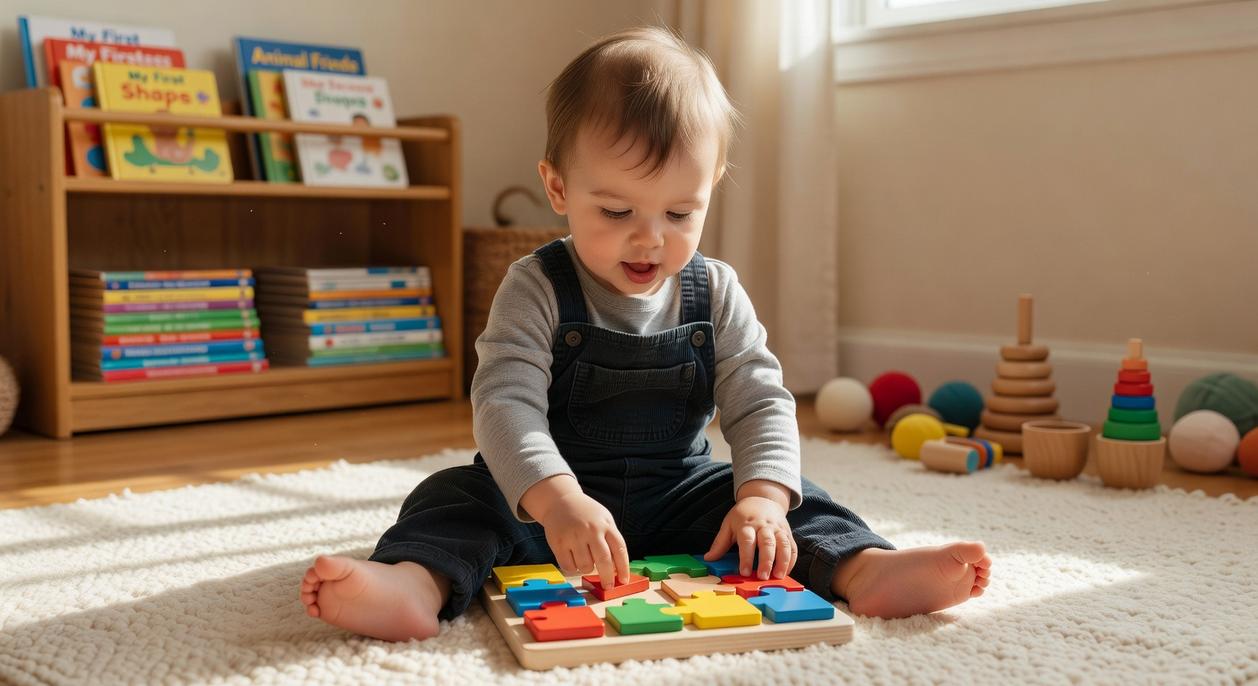
If you’ve ever handed your toddler a toy only to watch them ignore it and play with the box instead, you’re not alone. Toddlers need to touch, stack, dump, squish, and scribble. When they don’t get enough hands-on play, the meltdowns tend to follow (usually right when you’re making dinner).
The good news? The simplest activities are often the most powerful.
-
Stacking and Building
Use large blocks or empty food containers. Stacking builds precision and control while teaching balance and cause-and-effect (yes, they will knock it down on purpose). This supports spatial awareness—understanding how objects fit in space—which is foundational for early math skills (National Association for the Education of Young Children). -
Play-Dough Power
Kneading, rolling, pinching, and squishing play-dough strengthens intrinsic hand muscles—the small muscles inside the hand needed for writing. Add plastic knives for cutting practice. Pro tip: slightly firmer dough gives a better “workout.” -
Posting and Sorting
Cut a slot in an oatmeal lid and let them post large pom-poms or bottle caps. This refines the pincer grasp (thumb and index finger working together), a critical milestone for self-feeding and later pencil control (American Academy of Pediatrics). -
Scribbling and Painting
Offer chunky crayons, chalk, or finger paints. Focus on the process, not the product. Scribbling is the first step toward writing—not random chaos (even if it ends up on your wall).
These fine motor activities for toddlers channel busy energy into real skill-building—without fancy toys or Pinterest pressure.
Preschool Precision: Refining Skills for School Readiness (3–5 Years)
Many parents assume kindergarten readiness is about memorizing letters and numbers. It’s not. It’s about control—of hands, fingers, and attention. Precision beats flashcards every time.
Activity 1 – Scissor Skills: Start by cutting play-dough snakes before moving to straight paper lines. Safety scissors and close supervision are essential. Cutting strengthens small hand muscles and builds hand–eye coordination (skills linked to later writing fluency, according to the American Academy of Pediatrics). Some argue scissors are “too advanced” at this age—but avoiding them often delays confidence.
Activity 2 – Threading and Lacing: Large beads with a shoelace—or pasta and yarn—boost bilateral coordination (using both hands together) and refined finger control. Yes, it’s simple. That’s the point.
Activity 3 – Using Tongs and Tweezers: Transfer pom-poms between bowls. This playful resistance builds grip strength faster than many trendy fine motor activities for toddlers.
Activity 4 – Pre-Writing Practice: Draw circles and squares, trace lines, or use sand trays and whiteboards for low-pressure repetition. Contrary to popular belief, messy perfection isn’t the goal—controlled imperfection is.
School readiness isn’t academic acceleration. It’s steady, skillful hands (and patience to match).
Helping Your Toddler Thrive Every Day
You came here looking for simple, practical ways to support your toddler’s development without feeling overwhelmed — and now you have them. From playful routines to intentional practice with fine motor activities for toddlers, you’re equipped with tools that turn everyday moments into powerful learning opportunities.
If you’ve been worrying about whether your child is “on track” or feeling unsure about how to keep them engaged without constant screen time, remember this: small, consistent actions make a big difference. The right activities build confidence, coordination, and independence — all while strengthening your bond.
Now it’s time to put these ideas into action. Choose one or two activities today and start there. Save this guide, share it with another parent, and keep coming back for more research-backed, parent-approved strategies that make toddler growth easier and more joyful.
Thousands of parents rely on our trusted parenting insights to simplify routines and support healthy development. If you’re ready to turn daily chaos into confident progress, explore more expert-backed guides and start building a stronger foundation for your toddler today.
 Parenting Content Manager
There is a specific skill involved in explaining something clearly — one that is completely separate from actually knowing the subject. Carlos Magnerifier has both. They has spent years working with nitka toddler development guides in a hands-on capacity, and an equal amount of time figuring out how to translate that experience into writing that people with different backgrounds can actually absorb and use.
Carlos tends to approach complex subjects — Nitka Toddler Development Guides, Child Growth Insights, Motherhood Routine Hacks being good examples — by starting with what the reader already knows, then building outward from there rather than dropping them in the deep end. It sounds like a small thing. In practice it makes a significant difference in whether someone finishes the article or abandons it halfway through. They is also good at knowing when to stop — a surprisingly underrated skill. Some writers bury useful information under so many caveats and qualifications that the point disappears. Carlos knows where the point is and gets there without too many detours.
The practical effect of all this is that people who read Carlos's work tend to come away actually capable of doing something with it. Not just vaguely informed — actually capable. For a writer working in nitka toddler development guides, that is probably the best possible outcome, and it's the standard Carlos holds they's own work to.
Parenting Content Manager
There is a specific skill involved in explaining something clearly — one that is completely separate from actually knowing the subject. Carlos Magnerifier has both. They has spent years working with nitka toddler development guides in a hands-on capacity, and an equal amount of time figuring out how to translate that experience into writing that people with different backgrounds can actually absorb and use.
Carlos tends to approach complex subjects — Nitka Toddler Development Guides, Child Growth Insights, Motherhood Routine Hacks being good examples — by starting with what the reader already knows, then building outward from there rather than dropping them in the deep end. It sounds like a small thing. In practice it makes a significant difference in whether someone finishes the article or abandons it halfway through. They is also good at knowing when to stop — a surprisingly underrated skill. Some writers bury useful information under so many caveats and qualifications that the point disappears. Carlos knows where the point is and gets there without too many detours.
The practical effect of all this is that people who read Carlos's work tend to come away actually capable of doing something with it. Not just vaguely informed — actually capable. For a writer working in nitka toddler development guides, that is probably the best possible outcome, and it's the standard Carlos holds they's own work to.