
Understanding cognitive development stages in children is essential for parents who want to support learning, behavior, and emotional growth in meaningful ways. Many caregivers notice changes in how their child thinks, solves problems, or communicates—but aren’t always sure what’s typical or how to respond. This guide is designed to give you clear, practical insight into how children’s thinking evolves from infancy through the early school years, and what you can do to nurture each stage with confidence.
We break down what happens at each phase, the milestones to watch for, and simple, research-backed activities that strengthen memory, language, attention, and problem-solving skills. Our recommendations are grounded in established child development research and reviewed against guidance from pediatric and early education experts.
By the end of this article, you’ll understand what to expect, how to encourage healthy development, and how to recognize when extra support may be helpful.
Ever notice how last year your toddler hid behind hands and believed she vanished? That magical thinking is normal. By age seven, kids sort toys by color or size—skills that often sharpen around the second-grade year. These shifts reflect cognitive development stages in children, a science-backed sequence mapped over decades of research since Piaget’s work in the 1950s. Understanding the timeline changes everything.
- Infancy builds object permanence.
- Early childhood sparks symbolic play.
- Middle childhood strengthens logic.
Some argue every child develops randomly. Yet longitudinal studies show patterns emerge over time (even if pace varies). Watch, support, repeat.
From the moment a baby is born, learning happens through movement and sensation. During the Sensorimotor Stage (Birth to 2 Years), infants explore by grasping, shaking, tasting, and listening. In fact, Jean Piaget identified this as the first of the cognitive development stages in children, emphasizing that thinking begins with action.
One of the most researched breakthroughs in this period is object permanence—the understanding that things exist even when hidden. Before it develops, a toy covered by a blanket simply vanishes from the child’s mind. However, research published in Developmental Psychology shows that most babies begin demonstrating early signs of object permanence around 4 to 8 months, with more consistent understanding by 8 to 12 months (Baillargeon, 1987). That’s why peek-a-boo sparks such joy; it’s a live experiment in memory and prediction.
So how can you support this growth? First, offer textured toys, soft fabrics, and safe household objects for supervised exploration. Next, play simple hiding games that encourage searching and reaching. Over time, these repeated experiences strengthen neural pathways tied to memory and problem-solving. Pro tip: pause briefly before revealing a hidden toy to encourage anticipation and active thinking. These moments build confidence through discovery and repetition and curiosity.
The Preoperational Stage (2 to 7 Years): The World of Symbols and Imagination
This is the age of magic, make-believe, and a rapidly expanding vocabulary. Children begin using symbols—things that stand for something else (like a stick becoming a “magic wand”)—to represent their world. It’s one of the most fascinating cognitive development stages in children because thinking shifts from purely physical exploration to mental representation.
You’ve probably heard that this stage is defined by egocentrism. True—but let’s challenge the usual take. Egocentrism doesn’t mean selfishness. It means children genuinely assume others share their exact perspective. If they love broccoli, surely you do too (bold assumption, right?). Likewise, they struggle with conservation, the understanding that quantity stays the same despite changes in shape. Pour juice into a taller glass and suddenly it’s “more.”
Some argue kids should be corrected quickly to “think logically.” But here’s the contrarian view: rushing logic can shortchange imagination. Pretend play isn’t fluff; it’s cognitive rehearsal. When your child pretends to be a doctor, a dragon, or Elsa from Frozen, they’re experimenting with roles, rules, and emotions.
To support this stage:
- Encourage imaginative play with open-ended toys
- Use storybooks to explore different viewpoints
- Ask feeling-based questions (“Why was the bear upset?”)
- Model perspective-taking in daily life
Pro tip: When addressing conservation errors, demonstrate repeatedly instead of debating. Seeing is believing at this age.
In short, what looks illogical is actually foundational thinking in progress. (And honestly, a world where sticks are magic wands sounds pretty brilliant.)
The Concrete Operational Stage (7 to 11 Years): The Dawn of Logical Thought
Between ages 7 and 11, children enter what psychologists call the concrete operational stage, one of the core cognitive development stages in children. During this phase, thinking becomes more logical, organized, and flexible. However, it’s still tied to concrete information—things they can see, touch, or directly experience. Abstract ideas? Not so much (try explaining cryptocurrency to a third grader).
One of the biggest milestones here is conservation—the understanding that quantity doesn’t change just because appearance does. Pour water from a short, wide glass into a tall, thin one, and they now know it’s the same amount. They also grasp reversibility, meaning they understand that actions can be undone (if 3 + 4 = 7, then 7 − 4 = 3). In addition, they can classify objects by multiple features, such as sorting blocks by both color and shape.
I learned this lesson the hard way. At first, I tried teaching big, abstract moral concepts through long lectures. It flopped. Eventually, I realized hands-on experiences worked far better. So instead, we baked cookies to practice measurement and fractions. We played strategy-based board games. We ran simple science experiments at the kitchen table. Suddenly, the logic clicked.
However, some argue kids should be pushed toward abstract thinking earlier. While stretching their minds matters, skipping the concrete foundation often leads to frustration. Strong logical thinking grows from real-world practice first.
For parents wanting a broader view of growth beyond logic, exploring emotional development in children what parents should know can offer helpful perspective.
The Formal Operational Stage (12 and Up): Thinking in the Abstract
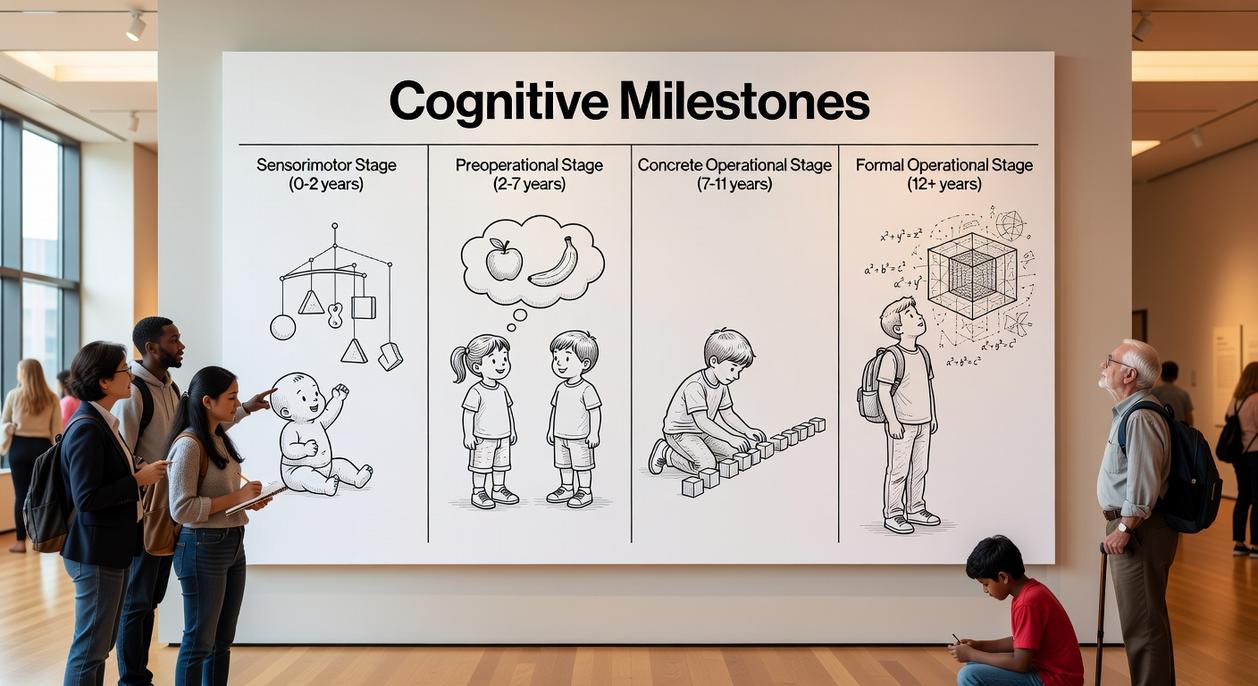
By around age 12—and continuing through the teen years—young people enter the final of the cognitive development stages in children. At this point, their thinking shifts. Instead of focusing only on what is concrete, they begin exploring abstract ideas like justice, morality, and identity. Over time, especially through middle and high school, their reasoning becomes more systematic and scientific.
As a result, debates about climate change or fairness at school suddenly feel urgent to them (yes, even at the dinner table). Ever wondered why teens question everything? Encourage thoughtful discussions, challenge assumptions respectfully, and revisit big questions as their perspectives mature.
A Parent’s Guide to Supporting Every Stage
Your child’s growth isn’t random—it follows predictable cognitive development stages in children, from reflex-driven infancy to abstract teenage reasoning. When tantrums or debates flare up, pause (yes, even when you’re tired). Ask: What can their brain handle right now?
Practical ways to support them:
- Toddlers: Offer simple choices (“Blue cup or red cup?”) to build decision skills.
- Preschoolers: Use pretend play to explain big ideas (sharing, feelings).
- School-age kids: Ask open-ended questions to stretch reasoning.
- Teens: Invite discussion, not lectures (think coach, not commander).
Pro tip: Observe before correcting. Development isn’t a race—it’s a journey to enjoy.
Supporting Your Child’s Growth with Confidence
You came here looking for clarity about your child’s development—and now you have a stronger understanding of how growth unfolds and why each milestone truly matters. By recognizing the cognitive development stages in children, you’re better prepared to respond to your child’s needs with patience, confidence, and intention.
Parenting can feel overwhelming when you’re unsure if your child is “on track.” That uncertainty can lead to stress, second-guessing, and missed opportunities to nurture key skills. But when you understand how your child thinks, learns, and processes the world at each stage, you replace doubt with direction.
Now it’s time to take the next step. Start applying what you’ve learned through simple, daily interactions—ask open-ended questions, encourage exploration, and create routines that support healthy brain development. And if you want practical, easy-to-follow parenting tips trusted by thousands of growing families, explore more of our expert-backed guides today. Get the support you need, feel confident in your parenting choices, and help your child thrive—starting now.