
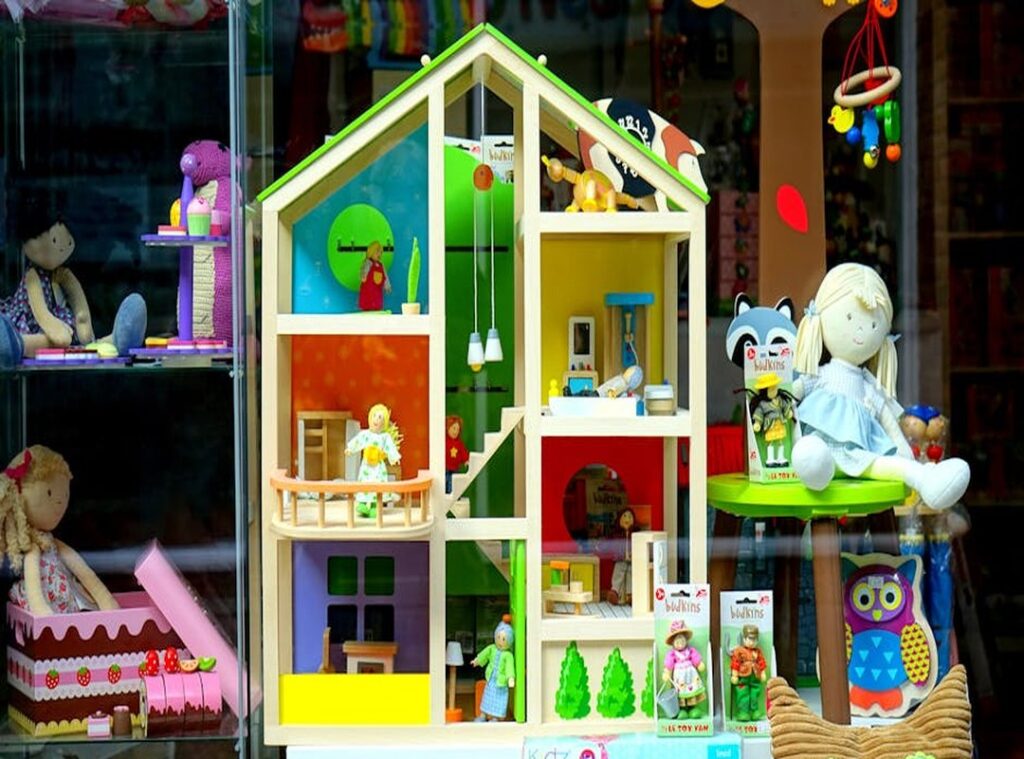
You’re standing in the toy aisle again.
Or scrolling past another ad that says “brain-boosting!” or “STEM-ready!” or “clinically proven!” (it’s not).
I’ve been there. More times than I can count.
And every time, I ask the same question: What does this actually do for a kid’s brain. Or does it just look good on Instagram?
Most Cwbiancaparenting Toys don’t match what science says kids need at each age.
Some even get in the way of focus. Or creativity. Or calm.
I’ve watched real children (hundreds) of them. Play with real toys. From newborns staring at high-contrast cards to five-year-olds building towers that collapse and rebuild and collapse again.
No screens. No flashing lights. No batteries required.
I know which ones hold attention without hijacking it. Which ones grow with a child instead of collecting dust after two weeks.
This guide cuts through the noise.
It shows you how to pick playthings that line up with how kids actually learn and feel. Not how marketers want you to feel.
No buzzwords. No fake claims.
Just clear choices. Backed by observation. Tested in real homes.
You’ll leave knowing exactly what to buy. And why it matters.
Why “Age-Appropriate” Is a Lie We Tell Ourselves
I used to believe the safety label was the whole story.
Then my kid stared blankly at a $40 “learning tablet” while banging a wooden spoon on a bowl for 22 minutes.
That spoon wasn’t safe. It was necessary.
At 12 months, kids aren’t wired for flashing lights or voice prompts. Their brains are building neural pathways through repetition, cause-and-effect, and sensory feedback. Not passive screen time.
A busy board gives them control. They flip, slide, turn, and feel resistance. A light-up shape sorter?
It beeps, flashes, and resets before they finish thinking. That’s not learning. That’s distraction dressed up as education.
The American Academy of Pediatrics says unstructured play builds attention, language, and problem-solving. Not apps that do the thinking for them.
You know what your kid actually needs? Time. Space.
Simple objects. And adults who don’t rush to “upgrade” their play because marketing says so.
Cwbiancaparenting isn’t about picking safer toys. It’s about picking smarter ones (the) kind that match how kids’ hands, eyes, and brains actually work right now.
Not next year. Not when they’re “ready.” Right now.
That wooden spoon? Still in rotation. The tablet?
In a drawer. (Where it belongs.)
Sustained attention starts with something you can hold. Not something that holds your child’s attention for you.
Don’t outsource development to plastic and batteries.
Your kid’s brain is doing real work. Give it real tools.
Overstimulation Isn’t Cute (It’s) Exhausting
I watched my kid spin through six toys in eight minutes. Then melt down over a dropped spoon.
That’s not energetic. That’s overstimulation.
You know it when you see it: darting eyes, sudden shrieks after playtime, refusal to nap, or staring blankly at the wall like their brain just blue-screened.
Flashing lights hijack attention. Loud sounds spike cortisol. Forced pacing trains kids to expect constant input (and) punishes stillness.
Their nervous system isn’t built for that. Not yet.
I swapped an electronic learning pet (beeping, blinking, talking at them) for a fabric sensory ball.
Big difference.
With the pet, they’d grab, drop, grab again, then scream when it chirped on cue. With the ball? They rubbed it slowly.
Squeezed it. Rolled it off the couch and crawled after it. Stayed with it for twelve minutes.
Twelve minutes of quiet focus. No meltdown after.
If your child looks away, covers ears, or throws it. Pause and observe what their body is telling you.
That’s not defiance. It’s data.
We keep buying louder, faster, brighter (like) more stimulus equals more learning. It doesn’t. It just wires kids for reactivity instead of regulation.
Cwbiancaparenting Toys often skip this part entirely. They market joy but ignore the cost.
Your kid’s brain builds self-regulation during calm moments (not) during light shows.
So turn it off. Put it away. Watch what happens when nothing demands their attention.
Open-Ended Play: Why Less Stuff Makes Smarter Kids

I watch my kid turn a pinecone into a spaceship, then a pet, then currency in a grocery game. That’s open-ended play.
It means no instructions. No “right” way. Just blocks, scarves, smooth stones, stacking rings.
Things that bend to the child’s idea, not the other way around.
At 4: build a castle and narrate a dragon siege. At 5: test ramp angles and crash physics. It grows with them.
Same wooden block set? At 18 months: stack them. At 3: count them.
Not the other way around.
That’s how executive function builds. Planning happens when they decide what tower to build before grabbing blocks. Flexibility kicks in when the tower falls and they pivot to bridges instead.
Working memory shows up when they remember three steps of their pretend bakery routine.
Don’t confuse “simple” with “open-ended.” A rigid puzzle with one solution isn’t open-ended. Even if it has five pieces. It trains compliance, not creativity.
I’ve seen kids shut down fast with those so-called “open-ended” toys that only click together one way. Their eyes glaze over. They ask, “Is this right?” instead of “What if?”
You want real flexibility? Start with things that don’t talk, don’t light up, and don’t tell the kid what to do.
The Cwbiancaparenting approach nails this. It’s why I keep coming back to their take on Cwbiancaparenting Toys.
Skip the battery-powered noise. Hand them a scarf and step back.
They’ll surprise you.
How to Audit Your Toy Shelf (A) 5-Minute Reality Check
I grab a timer. Set it for five minutes. You can do this right now.
Does it need batteries? Does it talk for the child instead of with them? Does it shrink imagination (or) stretch it?
Can it be used in three different ways today?
If you hesitated on any of those, that toy’s already on thin ice.
“Keep & Rotate” means it sparks open-ended play and gets used at least once a week. “Donate/Pass On” is for toys that still work but haven’t been touched in over a month. “Retire Now” is for broken, single-use, or screen-saturated junk. (Yes, I mean that.)
Grab three boxes or blankets. Label them:
Keep & Rotate, Donate/Pass On, Retire Now.
You don’t need to replace everything. Just shift the ratio. Fewer toys.
Richer play.
Your kid doesn’t need more stuff. They need more time. More space.
More support to play deeply.
That’s why I keep coming back to what works. Not what’s trending. Like the Entertainment cwbiancaparenting guide.
It’s not about cutting toys out. It’s about cutting clutter out so real play can move in.
Cwbiancaparenting Toys? That phrase isn’t magic. It’s just a reminder: intention beats inventory.
One Toy. One Week. Done.
I’ve watched parents freeze in toy aisles. Stare at shelves full of “developmental” junk. Feel guilty for not doing more.
You’re tired of choosing wrong. Tired of advice that contradicts itself. Tired of thinking play has to be perfect.
It doesn’t.
Cwbiancaparenting Toys aren’t about buying right. They’re about seeing what’s already there. And using it with purpose.
Pick one toy you already own. Just one. A block.
A cup. A rattle.
Try it differently this week. Sort by color. Stack by sound.
Roll it slow and watch their eyes follow.
That’s it.
No setup. No checklist. No guilt.
You’ll notice things you missed before. Their focus. Their pause.
Their quiet laugh when the cup flips upside down.
Watch closely. Listen slowly. Let play lead.
And trust what you see.
 Child Development Specialist
Eddiever Kongisterons is the kind of writer who genuinely cannot publish something without checking it twice. Maybe three times. They came to nitka toddler development guides through years of hands-on work rather than theory, which means the things they writes about — Nitka Toddler Development Guides, Mom Life Highlights, Curious Insights, among other areas — are things they has actually tested, questioned, and revised opinions on more than once.
That shows in the work. Eddiever's pieces tend to go a level deeper than most. Not in a way that becomes unreadable, but in a way that makes you realize you'd been missing something important. They has a habit of finding the detail that everybody else glosses over and making it the center of the story — which sounds simple, but takes a rare combination of curiosity and patience to pull off consistently. The writing never feels rushed. It feels like someone who sat with the subject long enough to actually understand it.
Outside of specific topics, what Eddiever cares about most is whether the reader walks away with something useful. Not impressed. Not entertained. Useful. That's a harder bar to clear than it sounds, and they clears it more often than not — which is why readers tend to remember Eddiever's articles long after they've forgotten the headline.
Child Development Specialist
Eddiever Kongisterons is the kind of writer who genuinely cannot publish something without checking it twice. Maybe three times. They came to nitka toddler development guides through years of hands-on work rather than theory, which means the things they writes about — Nitka Toddler Development Guides, Mom Life Highlights, Curious Insights, among other areas — are things they has actually tested, questioned, and revised opinions on more than once.
That shows in the work. Eddiever's pieces tend to go a level deeper than most. Not in a way that becomes unreadable, but in a way that makes you realize you'd been missing something important. They has a habit of finding the detail that everybody else glosses over and making it the center of the story — which sounds simple, but takes a rare combination of curiosity and patience to pull off consistently. The writing never feels rushed. It feels like someone who sat with the subject long enough to actually understand it.
Outside of specific topics, what Eddiever cares about most is whether the reader walks away with something useful. Not impressed. Not entertained. Useful. That's a harder bar to clear than it sounds, and they clears it more often than not — which is why readers tend to remember Eddiever's articles long after they've forgotten the headline.