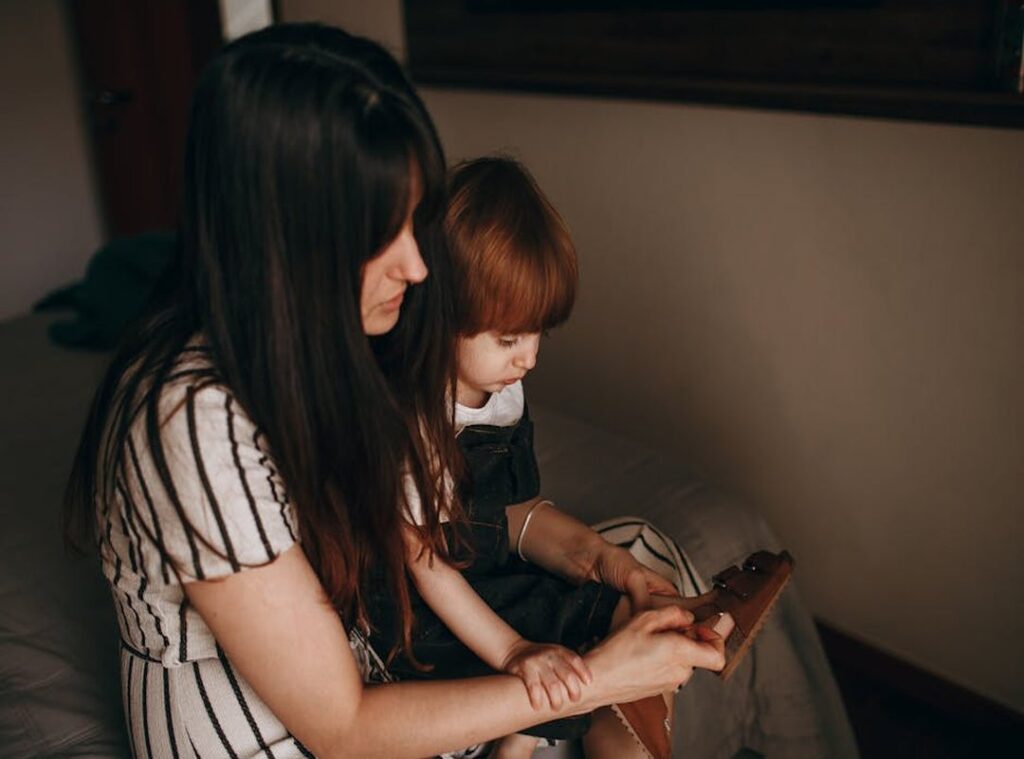

Ever felt a knot in your stomach watching a toddler on social media recite the alphabet while yours is still perfecting the art of throwing food? You’re not alone. This endless comparison game can drive any parent up the wall.
It’s tough not knowing if your child’s development is “normal.” I’ve been there, questioning every step. We know the pressure from experience. But here’s the thing: all those myths childhood development can steal your peace.
Worry not. This piece will debunk those pesky misconceptions, turning anxiety into confidence. Let’s arm you with information and make parenting a bit less daunting.
Myth #1: Timelines Aren’t Set in Stone
Parents, let’s talk about the anxiety around childhood milestones. Those charts and apps can make it feel like your child’s development is a race against time. But here’s the truth: there’s no strict timetable for milestones like walking and talking.
It’s more about developmental “windows” or “ranges” than rigid deadlines. Just like how some flowers bloom in early spring and others wait until late spring, both are perfectly healthy.
Think about it. If a child is climbing and running but not talking much, they’re not behind. They’re just focusing on gross motor skills.
On the flip side, a kid might start talking up a storm before they feel confident enough to walk. Neither scenario means there’s a problem. It just means the child is developing at their own pace.
So, how can you ease the milestone anxiety? Stop stressing about when your child will hit a certain mark. Instead, observe how they’re exploring their world.
Are they trying to communicate in ways other than words, like pointing or babbling? Progress is progress, no matter how slow it seems.
Trust your instincts. You know your child better than any chart. If you’re still worried, you can always check out how the role of play in child development can support growth.
Sometimes, kids just need a little more playtime to open up their potential.
In the end, it’s not about when your child reaches a milestone. It’s about how they’re engaging with their surroundings and making progress. Trust the process and give yourself (and) your child.
A break. Myths about childhood development can be misleading, but with a little patience and observation, you can get through them with confidence.
Myth #2: Early Achievement Doesn’t Equal Future Success
You know the pressure. Your friend’s kid is reading Shakespeare at three, and you start to panic. But let’s face it (this) whole “early reader” or “potty-trainer” race is just a competitive parenting trap.
Sure, it’s great to have a kid who can recite the periodic table before kindergarten, but does it really matter in the long run?
Pushing kids before they’re ready can backfire. Imagine trying to teach a toddler calculus. It’s not just about the frustration (though there’s plenty of that).
It’s about developmental readiness. Kids need to be physically, cognitively, and emotionally prepared for new skills. Rushing them can lead to anxiety or even outright refusal to cooperate.
Ever tried potty training a toddler who just isn’t having it? It’s like wrestling a tiny, stubborn alligator.
Read stories together without the pressure. Build a love of learning. Help them develop body awareness and emotional security.
Instead, focus on what truly matters. Build a strong, positive parent-child connection. It’s a far better predictor of long-term well-being than early achievements.
That’s the real foundation for success.
And remember, your child’s timeline is unique. Honor it. Respect it.
Doing so builds their confidence and sets them up for real success. Let’s stop comparing kids like they’re on some mythical timeline. They’re not.
For more on this, check out 6 common ece myths (and the. It’s time to rethink these myths of childhood development and focus on what truly counts.
Growth: More Than Height and Weight
When we talk about growth, we often imagine kids shooting up like bamboo and packing on pounds. But guess what? Some of the most significant growth is hidden.

It’s the kind you can’t chart on a height and weight graph. Have you ever watched a toddler suddenly grasp a new concept? That’s a cognitive leap.
It’s like watching Neo in “The Matrix” suddenly see the code. Language? One minute they’re babbling, and the next, they’re spouting full sentences.
It’s a language explosion, not unlike a superhero discovering their powers.
But here’s the kicker: this invisible growth often comes with a side of challenging behavior. Ever notice how a kid’s sleep goes haywire after a big mental leap? Their brain is working overtime, processing all the new info.
It’s like trying to sleep the night before a big game. And those tantrums? They’re not just random fits.
They’re signs of a developing will. A brain wrestling with new, big emotions. Clinginess?
That’s a fresh understanding of object permanence. It’s a revelation akin to Harry Potter learning about magic.
It’s easy to get frustrated. I get it. But what if we reframed these tough phases?
Start seeing them as signs of growth rather than just nuisances. You’re not just dealing with a cranky toddler. You’re watching a little human evolve.
How culture impacts these parenting moments is fascinating too. If you’re curious, this guide dives into that topic.
Next time you’re facing a meltdown, remember: there’s more happening than meets the eye. Myths about childhood development often miss this. Growth isn’t just about getting taller and heavier.
It’s about the magical, invisible leaps happening inside their heads.
Myth #4: More Toys, Smarter Kid?
Ever felt the pressure to fill your home with the latest “educational” toys? You’re not alone. Parents everywhere are bombarded by promises that more will make their kids smarter.
But here’s the kicker: it’s just not true.
Research shows that unstructured, child-led play is gold for development. It builds creativity, key thinking, and problem-solving skills. Things like a cardboard box turning into a rocket ship or a castle.
It’s magical, right? Kids aren’t just playing. They’re learning how to think outside the box (pun intended).
Structured activities have their place, sure. But they often lack the depth of imagination needed to really stretch a young mind. I mean, how much can a toy do for a kid if it only has one function?
Blocks, on the other hand, teach basic physics and spatial relations. They do more for development than a beeping toy ever could.
So, here’s a thought: what if you did less? It sounds counterintuitive, I know. But think about it.
When kids get bored, their creativity kicks in. They invent games and worlds. A simple play environment gives them space to explore their minds.
It’s not cluttered with flashing lights and noise.
The takeaway? The best “toy” for your child is a present and engaged parent. And the best “curriculum” is free play.
Let go of the myths about childhood development. Trust that your child’s imagination, fueled by a little boredom and a lot of love, is more solid than any class or gadget.
Trust Your Child’s Unique Path
We’ve just peeled back some of the most stubborn myths childhood development clings to, haven’t we? That universal yardstick? It’s a lie.
It’s not how growth works. Pressure to conform steals your joy and your child’s.
So what now? Focus on your connection. Observe your child’s unique signals.
Trust their timeline. That’s real support. That’s how you nurture a happy, healthy child.
What worry are you finally letting go of after reading this? Share below. You’re not alone, and your journey matters.
Let’s hear from you. We’re here for you. Ready to embrace this new path?
Let’s start today.
 Parenting Content Manager
There is a specific skill involved in explaining something clearly — one that is completely separate from actually knowing the subject. Carlos Magnerifier has both. They has spent years working with nitka toddler development guides in a hands-on capacity, and an equal amount of time figuring out how to translate that experience into writing that people with different backgrounds can actually absorb and use.
Carlos tends to approach complex subjects — Nitka Toddler Development Guides, Child Growth Insights, Motherhood Routine Hacks being good examples — by starting with what the reader already knows, then building outward from there rather than dropping them in the deep end. It sounds like a small thing. In practice it makes a significant difference in whether someone finishes the article or abandons it halfway through. They is also good at knowing when to stop — a surprisingly underrated skill. Some writers bury useful information under so many caveats and qualifications that the point disappears. Carlos knows where the point is and gets there without too many detours.
The practical effect of all this is that people who read Carlos's work tend to come away actually capable of doing something with it. Not just vaguely informed — actually capable. For a writer working in nitka toddler development guides, that is probably the best possible outcome, and it's the standard Carlos holds they's own work to.
Parenting Content Manager
There is a specific skill involved in explaining something clearly — one that is completely separate from actually knowing the subject. Carlos Magnerifier has both. They has spent years working with nitka toddler development guides in a hands-on capacity, and an equal amount of time figuring out how to translate that experience into writing that people with different backgrounds can actually absorb and use.
Carlos tends to approach complex subjects — Nitka Toddler Development Guides, Child Growth Insights, Motherhood Routine Hacks being good examples — by starting with what the reader already knows, then building outward from there rather than dropping them in the deep end. It sounds like a small thing. In practice it makes a significant difference in whether someone finishes the article or abandons it halfway through. They is also good at knowing when to stop — a surprisingly underrated skill. Some writers bury useful information under so many caveats and qualifications that the point disappears. Carlos knows where the point is and gets there without too many detours.
The practical effect of all this is that people who read Carlos's work tend to come away actually capable of doing something with it. Not just vaguely informed — actually capable. For a writer working in nitka toddler development guides, that is probably the best possible outcome, and it's the standard Carlos holds they's own work to.